
Paraplegia and Tetraplegia
Causes of Paraplegia and Tetraplegia
Following a spinal cord injury, damaged or severed nerve fibres can form structures known as growth cones as the nervous system attempts to repair itself. However, several factors within the injured spinal cord, including components of the myelin sheath and scar tissue, can inhibit the regeneration of nerve fibres (axons) and prevent damaged connections from being restored.
This can result in varying degrees of paralysis and loss of sensation. Paraplegia affects the lower limbs and, depending on the level of injury, the trunk. Tetraplegia also affects the arms and hands and, in more severe cases, can impair breathing.
Walking Again? Yes, but Not Only…
Research continues to advance our understanding of motor recovery following spinal cord injury. However, improving mobility is only one aspect of recovery. Other scientific advances can have an equally important impact on the daily lives and quality of life of people affected by spinal cord injury.
Research can contribute to better pain management, improved bladder and sexual function, greater independence and an overall improvement in quality of life.
IRP is committed to funding research that addresses these different aspects of spinal cord injury. Particular emphasis is placed on translational research, which helps turn findings from fundamental and laboratory research into clinical applications and trials.
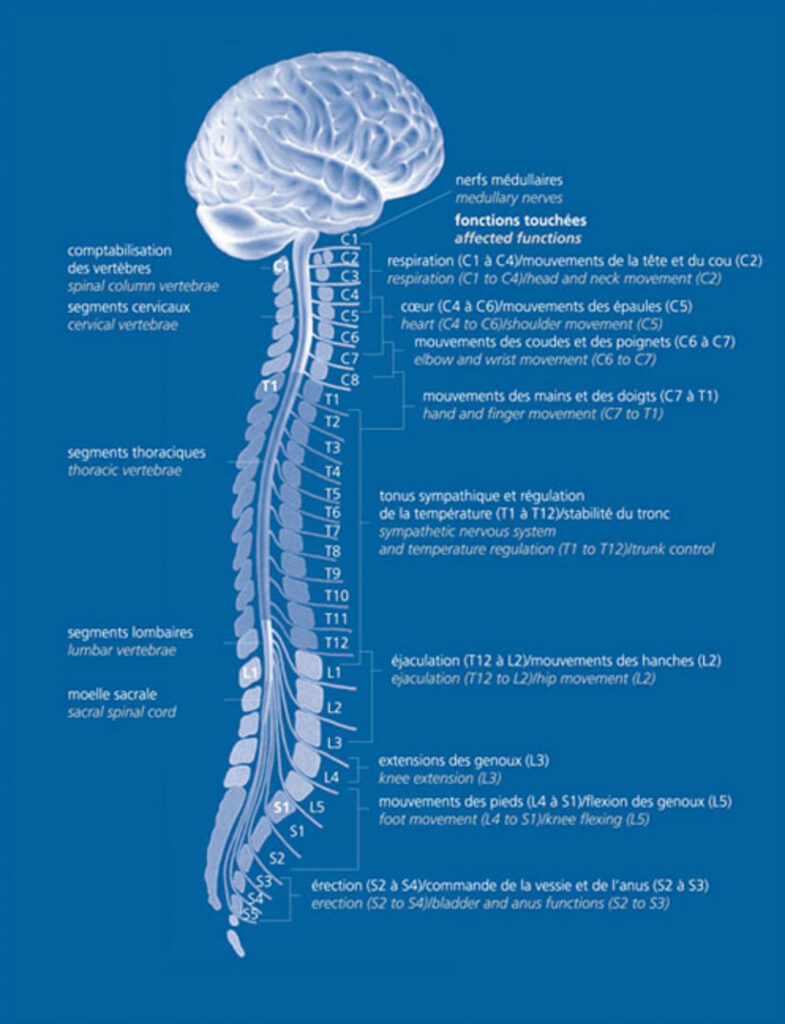
Loss of function resulting from spinal cord injury caused by an accident or disease